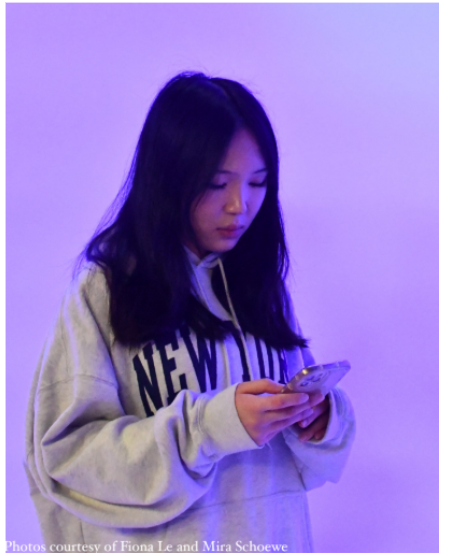
Senate Bill 68 alters Lindbergh’s preexisting phone policy
The new cell phone policy, also known as Senate Bill 68, has heavily impacted Lindbergh High School students and staff.
On July 9, 2025, Senate Bill 68 was signed by Missouri’s governor, Mike Kehoe. The bill banned the use of all electronic devices during school hours—including phones, headphones, and personal computers—with exceptions for uses related to education and safety. Under these regulations, devices cannot be used during class, passing period or lunch. This contrasts with Lindbergh’s previous phone policy, which imposed a ban only on the use of phones strictly during instructional class time.
As months have passed since the policy was first officially implemented, Mr. Andrew Little, a Lindbergh English teacher, now believes students have assimilated the new adjustments and demonstrated the social benefits of the ban.
“I like it because I feel like students are [interacting more] with each other in a good way than [being] stuck on their phones too much. I feel like they’re interacting more, they’re discussing more, and they’re having to rely on that,” Little said.
Mrs. Rachel Kleinberg, a psychology teacher, shared a similar opinion.
“I appreciate the limit in saying there are times when we are able to focus without that distraction [and] times when we need to work on our social skills. Because if we don’t do them in these environments, when are they happening? Like, when are we ever figuring out when to be human with each other?” Kleinberg said.
Despite research evidence and positive responses from Lindbergh High School students, the question remains: Is Senate Bill 68 truly a good fit, or are positive effects only temporary?
“Lindbergh is unique in the fact that the community is different from other school districts. I think you have to do what is ultimately best for your school. This is a hard rule to enforce because of how easily accessible cell phones are [and] how easily you can hide your phone or anything like that. So it’s tough, and there are times [when] I just want to teach,” said Little.
The phone ban’s enforcement is additionally said to be causing pause amongst staff and students. School-provided Chromebooks may allow communication through email applications and other related means; however, this may be inconvenient for students.
Freshman Lydia Brown is frustrated with phone regulations for similar reasons.
“It’s hard to find your friends, especially since friends will have a different schedule from you in clubs. I’m like, ‘Hey, where are you?’ You’re going to have to [communicate] through email, and then they’re gonna have to check their email and everything, so it’s definitely difficult,” Brown said.
As the new phone ban remains in place, students and staff are urged to follow enforcement procedures. Although students may frequently ask the question, Who voted? to pass the bill, Kleinberg said the answer is clear.
“Voters voted for the people that voted on the law; we don’t have a direct democracy, we have a representative democracy,” said Kleinberg.